MASTER OF AI AGENTS + Certificate

Wishlist Share

About Course

 AI‑Agents: Automation & Business with LangChain & LLM Apps

💡 Course Description:

Welcome to AI‑Agents: Automation & Business with LangChain & LLM Apps—a hands-on course designed to help you master the future of intelligent automation using cutting-edge AI agents, local and cloud-based language models, and powerful frameworks like LangChain.

In this course, you’ll learn how to build autonomous AI agents that can reason, use tools, retrieve data, and perform real-world business tasks—without writing complex logic from scratch.

Whether you’re an entrepreneur, developer, data analyst, or business professional, this course equips you with the practical skills to automate tasks, streamline workflows, and create AI-driven tools that operate with minimal human input.


🧠 What You Will Learn:

✅ What AI agents are and how they differ from chatbots
✅ How to use LangChain to create intelligent, task-solving agents
✅ Integrating LLMs like OpenAI, Mistral, or Ollama with memory and tools
✅ Automating business workflows like:

  • Email replies

  • CRM updates

  • Document summarization

  • Report generation
    ✅ Using real-world tools like Google Sheets, Notion, Zapier, APIs
    ✅ Deploying agents on the web with Streamlit, Docker, and Hugging Face
    ✅ Building AI systems that plan, reason, and collaborate across tasks
    ✅ Securely scaling your automation system for business use


🚀 Why Take This Course?

✅ AI agents are the future of automation—far more powerful than traditional chatbots
✅ LangChain is the #1 framework for building agentic LLM apps
✅ You’ll be able to automate repetitive tasks, save time, reduce costs, and create new digital products
✅ No prior AI experience needed—this course walks you through step by step
✅ You’ll learn how to work with both local open-source LLMs and cloud APIs
✅ Real business use cases: not just theory


🌍 Who Is This Course For?

  • 👩‍💻 Developers and engineers wanting to build LLM-powered agents

  • 🧑‍💼 Business professionals who want to automate processes with AI

  • 🚀 Startup founders looking to create AI-driven tools

  • 🧠 AI enthusiasts and makers experimenting with LangChain and agents

  • 📊 Analysts, marketers, and ops teams needing custom workflows


📈 The Market Opportunity

💼 Demand for AI automation is exploding:

  • Businesses are adopting LLM-powered tools to reduce overhead

  • GPT, Claude, and LLaMA models are becoming workplace standards

  • LangChain is the most in-demand framework for LLM application development

  • Freelancers and agencies are monetizing agent tools as products and services

  • New platforms like Zapier AI, AutoGPT, and Flowise are pushing this space forward

🧭 By the end of this course, you’ll be ready to:

  • Automate a business process using your own AI agent

  • Deploy it as a usable product

  • Customize and scale it to serve real clients or internal teams

See Community here

Forum


35
Show More

What Will You Learn?

  • 🚀 Course Purpose
  • The Master of AI Agents course is a deep, hands-on program that teaches learners how to design, build, and deploy autonomous, goal-driven AI agents that can think, reason, and act.
  • You'll learn to go beyond chatbots — building agents that plan, use tools, make decisions, and collaborate with other agents or humans.
  • 1. Agent Foundations
  • What AI agents are and how they differ from models or assistants
  • Types of agents: reactive, planning, multi-agent, tool-using
  • Agent architecture 101
  • 2. LLM + Tool Integration
  • LangChain, OpenAI Functions, Hugging Face Agents
  • Building agents that use tools, browse the web, or access APIs
  • Managing context, memory, and feedback loops
  • 3. Reasoning & Planning
  • Prompt engineering for structured tasks
  • Self-reflection, self-correction, and goal-driven planning
  • Chain-of-thought reasoning in real-time environments
  • 4. Multi-Agent Systems
  • Designing systems where agents talk to each other
  • Task delegation, negotiation, coordination
  • Case study: marketplace agents, swarm AI, autonomous collaboration
  • 5. Agents in the Wild
  • Deploying agents in web apps, automations, and real business systems
  • Scheduling, file handling, web scraping, form filling
  • Use cases: recruiting, sales, research, customer service
  • 6. Ethical & Practical Limits
  • Controlling runaway agents
  • Cost optimization and rate limits
  • Bias, trust, hallucination control
  • 🧪 Real Projects You'll Build
  • ✨ Personal Task Assistant that schedules, searches, and emails
  • 🤖 Sales Research Agent that uses tools to gather leads
  • 🧠 Team of Agents that delegate and report to each other
  • 🕸️ AI-powered web scraper and auto-responder
  • 🗂️ Autonomous PDF reader + summarizer + action agent
  • 💼 Outcomes & Career Benefits
  • By the end of this course, you’ll:
  • Be able to build production-ready AI agent systems
  • Understand how to design intelligence, not just use it
  • Be ready for careers in AI engineering, tooling, product, or founding your own AI-powered startup
  • 🛠️ Tools & Tech You’ll Use
  • LangChain, OpenAI APIs, Pinecone, ChromaDB
  • Python, JSON, REST APIs
  • ReAct, AutoGPT, BabyAGI frameworks
  • VS Code, Jupyter, Streamlit

Course Content

Module 1: Introduction to AI Agents and LangChain
In this foundational module, learners are introduced to the concept of AI agents and how they go beyond traditional chatbots to perform autonomous, intelligent tasks. The lessons explore real-world applications of AI agents in business automation, including customer support, data handling, and digital operations. Learners discover the capabilities of LangChain, the leading open-source framework for building LLM-powered agents. They also learn the differences between agents, chains, and tools, and how each part fits into building an intelligent system. The module concludes with a hands-on environment setup, where learners install Python, LangChain, and their preferred LLMs (like OpenAI or Ollama), and run their first simple LLM prompt. ✅ By the end of this module, learners will: • Clearly understand what an AI agent is and how it differs from a chatbot • Recognize common use cases for agents in business automation • Grasp the core components of LangChain and how agents are structured • Set up their development environment and run their first LLM call

Module 2 Foundations of LangChain
In Module 2, learners dive into the core building blocks of the LangChain framework, gaining the practical knowledge needed to create powerful language model–driven applications. The module explains how LangChain connects LLMs, prompts, chains, memory, and tools into a unified workflow. Through hands-on examples, learners build their first LangChain chains and begin to understand how agents make decisions and use tools to complete tasks. This foundational knowledge sets the stage for creating dynamic, intelligent AI agents in later modules. ✅ By the end of Module 2, learners will be able to: • Understand the structure and purpose of LLMs, prompts, chains, memory, retrievers, and tools in LangChain • Use PromptTemplate to create reusable prompt structures • Build simple LLMChain workflows for single-step tasks • Use memory to preserve context in conversations • Add retrievers to access external knowledge (e.g., document search) • Understand how tools connect LangChain to APIs, functions, or databases

✅ Module 3: Building Your First AI Agent
🎯 Objective: To guide learners through the hands-on process of creating their first functional AI agent using LangChain, including running models locally and enabling tool usage. 🔹 Lesson 3.1: Using Ollama to Run LLMs Locally • Goal: Run open-source language models like LLaMA, Mistral, or DeepSeek on your own machine. • Topics Covered: ◦ Installing Ollama (cross-platform setup) ◦ Pulling models (e.g., ollama pull mistral) ◦ Running a model and testing it via terminal ◦ Benefits: privacy, no API cost, offline use 🔹 Lesson 3.2: Setting Up LangChain Agent • Goal: Build an AI agent that can receive user input and respond intelligently using a local or API-based model. • Topics Covered: ◦ Initializing LangChain with a model (OpenAI or Ollama) ◦ Creating a basic ConversationAgent ◦ Using prompt templates to format instructions ◦ Testing agent with simple Q&A 🔹 Lesson 3.3: Adding Tools to the Agent • Goal: Extend the agent's capabilities by integrating tools like a calculator, weather fetcher, or knowledge base. • Topics Covered: ◦ Defining tools as Python functions ◦ Wrapping them using LangChain's Tool class ◦ Connecting multiple tools to the agent ◦ Agent reasoning to select appropriate tools based on user input 🔹 Lesson 3.4: Conversation Memory & Personalization • Goal: Enable the agent to remember prior messages and improve conversation flow. • Topics Covered: ◦ Using ConversationBufferMemory for short-term memory ◦ Setting up memory with the agent ◦ Example: remembering user name, previous questions ◦ Optional: summarizing long chats to save memory space 🔹 Lesson 3.5: Testing and Refining Your Agent • Goal: Evaluate the behavior and responsiveness of your first AI agent. • Topics Covered: ◦ Running the agent in a loop or basic chat interface ◦ Debugging tool calls and memory issues ◦ Prompt tuning for better agent performance ◦ Next steps: packaging and deploying your agent 🔧 Outcome by the End of Module 3: You’ll have a fully working AI agent that can: • Respond to user queries using a local or remote LLM • Use real-world tools (like calculators or APIs) • Hold short conversations with memory • Be customized for your future projects

Lesson 3.2: Setting Up LangChain Agent
🎯 Goal Create an AI agent that can accept user input and generate intelligent responses using a local model (via Ollama) or an API-based model (like OpenAI). 📘 Topics Covered 1. 🔌 Initializing LangChain with a Model ◦ Connected to OpenAI or a local LLM (e.g., Mistral via Ollama). ◦ Configured language model with required credentials or local runtime. 2. 🤖 Creating a Basic ConversationAgent ◦ Used LangChain’s AgentExecutor or LLMChain. ◦ Defined simple logic for question-answering. 3. 🧾 Using Prompt Templates ◦ Structured prompts to guide the model’s behavior. ◦ Made responses more accurate and aligned with user intent. 4. 🧪 Testing the Agent ◦ Ran interactive Q&A through terminal or script. ◦ Confirmed the agent responds contextually based on input. ✅ Outcome By the end of this lesson, you built a foundational AI agent capable of handling text input and returning useful responses — forming the core of more advanced agents with memory, tools, or voice.

🎓 Module 10: Capstone Project – Build Your Own AI Agent
This final module gives learners the chance to demonstrate everything they've learned by building and showcasing a complete, functional AI agent. It includes guided structure, support, and a submission format designed to help learners build a portfolio-worthy project they can share with employers, clients, or the course community.

AI AGENTS Goodies

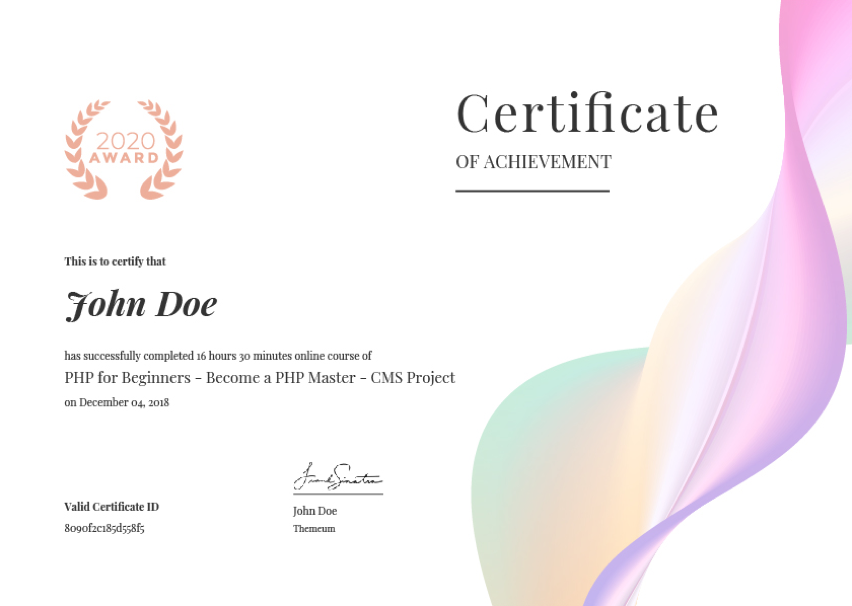
Earn a certificate

Add this certificate to your resume to demonstrate your skills & increase your chances of getting noticed.
selected template

Student Ratings & Reviews

No Review Yet
No Review Yet

Want to receive push notifications for all major on-site activities?

✕
error: Oops Sorry!!
Musomesa AI - Knowledge is Power