
Artificial Intelligence for Government + Certificate
About Course
“Learn Before It’s Late.”
The Future of Governance: How AI Can Revolutionize Government Efficiency
In an era defined by rapid technological advancements, artificial intelligence (AI) stands as a transformative tool that can redefine how governments operate. By integrating AI into governance, nations can enhance efficiency, reduce costs, improve public services, and strengthen decision-making processes. Governments worldwide must embrace AI to meet the growing demands of their citizens effectively. Here’s how AI can be leveraged to optimize government functions:
 57
57
Related
What Will You Learn?
- Course Objective:
- This course aims to equip government workers with a foundational understanding of artificial intelligence (AI) and its applications in governance. Participants will explore how AI can enhance decision-making, streamline operations, and improve public services while addressing ethical concerns and security risks.
- Course Outline
- Module 1: Introduction to AI in Governance
- What is AI? Key concepts and terminology
- The role of AI in modern governance
- Case studies: AI-driven government initiatives around the world
- Module 2: AI for Government Efficiency
- Automating administrative tasks (chatbots, document processing, predictive analytics)
- AI-powered decision-making and resource allocation
- Cost reduction and productivity improvement
- Module 3: AI in Public Services
- AI applications in healthcare, transportation, and education
- Smart cities and AI-driven infrastructure
- Enhancing citizen engagement through AI
- Module 4: Ethical and Legal Considerations
- Bias in AI and responsible AI deployment
- Transparency and accountability in government AI use
- Legal frameworks and compliance issues
- Module 5: AI and Cybersecurity in Government
- Protecting data and national security with AI
- Threat detection and fraud prevention
- Best practices for government AI security
- Module 6: Implementing AI in Government Agencies
- Steps for AI adoption in government
- Overcoming challenges (resistance to change, budget constraints, skill gaps)
- Future trends: What’s next for AI in governance?
- Final Project:
- Participants will propose an AI-driven solution to improve a specific government function, demonstrating practical application of course concepts.
- Delivery Format:
- Self-paced online modules (videos, articles, quizzes)
- Live workshops or webinars (expert guest speakers)
- Interactive case studies and real-world applications
Course Content
WHY YOU NEED THIS COURSE
Embracing AI for a Smarter Government
"Learn with the World."
To fully harness AI's potential, governments must invest in AI infrastructure, digital literacy, and ethical AI regulations. Collaborating with the private sector and academia can accelerate innovation, ensuring that AI deployment benefits all citizens. Policymakers must recognize AI as a tool not to replace human workers but to empower them, making governance more efficient, responsive, and forward-thinking.
The integration of AI is not a choice—it is a necessity. Governments that embrace AI today will be better equipped to navigate the challenges of tomorrow. The future of governance is intelligent, and AI is the key to unlocking its full potential.
Module 1: Understanding AI and Its Impact on Governance
Embracing AI
-
-
Historical evolution of AI in government
-
Ethical and legal considerations
-
Benefits and challenges of AI implementation
-
Understanding AI and Its Impact on Governance
-
Assignment: Understanding AI in Government
Module 2: AI in Public Services
-
AI-driven chatbots and virtual assistants
-
-
Hands-on Exercise: Creating an AI-powered response system
-
Assignment: AI in Public Services
-
Quiz: AI in Public Services
Module 3: AI for Administrative Efficiency
Module 3: AI for Administrative Efficiency
-
-
AI for fraud detection and reducing inefficiencies
-
Case Study: Singapore’s AI-Powered Governance
-
Hands-on Exercise: Using AI to analyze government data
-
Assignment: AI for Administrative Efficiency
-
Quiz: AI for Administrative Efficiency
Module 4: Data-Driven Decision Making
This covers AI’s role in data processing, predictive analytics, AI-powered policy-making, and policy development using AI.
-
How AI processes and interprets large datasets
-
Predictive analytics in crisis management
-
-
Hands-on Exercise: Applying AI for policy development
-
Assignment: Data-Driven Decision Making
-
Quiz: Data-Driven Decision Making
Module 5: AI for National Security
-
AI-enhanced surveillance and cybersecurity
-
-
Case Study: The UK’s AI-Enhanced Border Security
-
Hands-on Exercise: AI-based risk assessment
-
Assignment: AI for National Security
-
Quiz: AI for National Security
Module 6: AI in Legal and Judicial Processes
-
AI for legal research and contract analysis
-
Predicting case outcomes with machine learning
-
Case Study: AI in India’s Judiciary
-
-
Assignment: AI in Legal and Judicial Processes
-
Quiz: AI in Legal and Judicial Processes
Module 7: AI for Infrastructure and Smart Cities
-
-
Energy optimization using AI
-
Case Study: China’s Smart Traffic Systems
-
Hands-on Exercise: Designing an AI-powered city plan
-
Hands-on Exercise Tip: Designing an AI-Powered City Plan
-
Assignment: AI for Infrastructure and Smart Cities
-
Quiz: AI for Infrastructure and Smart Cities
Module 8: AI in Healthcare and Welfare Services
-
-
Hands-on Exercise: AI for healthcare resource allocation
-
Case Study: AI in the UK’s National Health Service (NHS)
-
Exercises, AND Case Study Highlights
-
Hands-on Exercise Tip: AI for Healthcare Resource Allocation
-
Assignment: AI in Healthcare and Welfare Services
-
Quiz: AI in Healthcare and Welfare Services
Module 9: AI for Transparency and Anti-Corruption
-
-
Case Study: AI Against Corruption in Brazil
-
Hands-on Exercise: AI-powered fraud detection in public administration
-
Hands-on Exercise Tip: AI-Powered Fraud Detection in Public Administration
-
Assignment: AI for Transparency and Anti-Corruption
-
Quiz: AI for Transparency and Anti-Corruption
-
Detailed Explanations and Insights
Final Module: Implementation and Future Readiness
-
Building AI governance frameworks
-
-
Collaborating with the private sector and academia
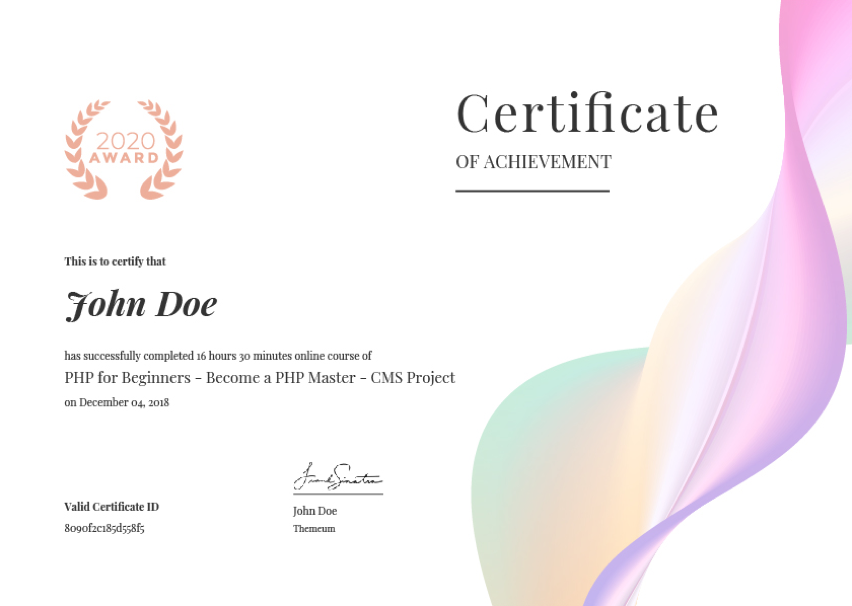
Earn a certificate
Add this certificate to your resume to demonstrate your skills & increase your chances of getting noticed.
Student Ratings & Reviews

No Review Yet